
SAND

Sand is all about nuances and changes with the light and the materials. From ivory to champagne, from mineral beige to warmer earth tones, it offers a contemporary take on neutrals in hospitality.

Sand is all about nuances and changes with the light and the materials. From ivory to champagne, from mineral beige to warmer earth tones, it offers a contemporary take on neutrals in hospitality.

In this photograph of mine, taken at Castel Frasburg, the glass does not separate two worlds, but rather connects them. The reflection of the mountain blends with the interior, transforming the landscape into part of the architecture. It is this dialogue between place and design that unites all the examples featured in this article.

The historic hotel in St. Moritz has received one of the most prestigious awards in the international hospitality industry, reaffirming a tradition of excellence that has defined Alpine luxury for over a century.

The Delano Miami Beach, reimagined by Italian artist Andrea Ferolla. © Andrea Ferolla, courtesy of Delano Miami Beach
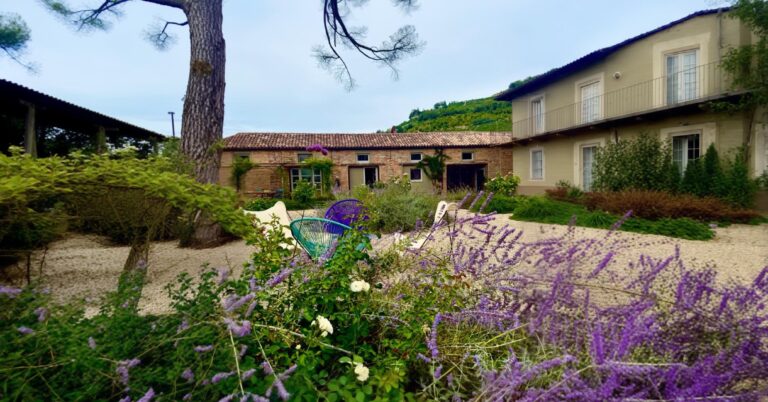
In Santo Stefano Belbo, in the heart of the Langhe, Vigne di Fagnano is a former noble estate that has been transformed into an intimate boutique hotel with just seven suites. Amid lavender fields, elegant design, memories of Cesare Pavese, and personalized hospitality, it embodies a vision of understated luxury deeply rooted in the local area.

From the walls to the furnishings, from the fabrics to the decorative details, blue makes its way into hotels as a subtle and enveloping presence. It is a color that evokes balance, well-being, and lightness, capable of conveying a new way of experiencing luxury: one that is more intimate, serene, and deeply connected to the spaces themselves.

Rosewood Castiglion del Bosco was named the No. 1 resort in Europe and No. 1 in Italy at the 2026 Travel + Leisure World's Best Awards. Nestled in the heart of the Val d'Orcia, this medieval village-turned-resort blends hospitality, architecture, landscape, and local culture, reaffirming its status as one of the most iconic destinations in Italian luxury.

Contemporary hospitality is no longer measured solely by comfort or exclusivity. At Shebara, on the Saudi Red Sea coast, luxury takes shape through design: a balance of architecture, innovation, landscape, and environmental responsibility that redefines the guest experience.

Field Notes from the Principality: hotels that resemble private residences, spas overlooking the Mediterranean, signature cocktail bars, and beach clubs designed by leading fashion houses. This is how Monte Carlo reinterprets contemporary luxury today.

Orient Express Venice restores new life to Palazzo Donà Giovannelli, transforming a 15th-century Gothic mansion into a project that combines restoration, design and cultural hospitality in the heart of Cannaregio.

With the Thebe Magugu Suite and the new Magugu House, Cape Town's Mount Nelson interprets one of the most interesting trends in contemporary hospitality: the transformation of hotels into cultural platforms capable of telling the story of the area through design, art and creativity.

In Cortona, the Baracchi family has transformed a historic estate into a hospitality ecosystem where wine, wellness and sustainability coexist in an authentic tale of contemporary Tuscany.

A snapshot of Il Bosco, the open-air restaurant at Collegio alla Querce, Auberge Resorts Collection in Florence. Nestled among the olive trees of the Florentine hills, the space inaugurates the summer season under the banner of contemporary conviviality with its new Social Table format and exclusive gelato cart in collaboration with the historic city institution Vivoli.

From the top of its hill, Castel Badia has observed the valley for more than a thousand years. Today the ancient monastic complex opens to a new season, transforming history, landscape and hospitality into an experience that celebrates the rarest value of contemporary luxury: time.

A land of private conservancies, great migration and sustainable safaris, where the new African luxury comes from the balance between humans, wildlife and landscape.

Hôtel Saint-Georges interprets a new idea of mountain luxury: more emotional than spectacular, more narrative than decorative. Through the project signed by Luke Edward Hall, the mountain is transformed into a sensory experience made of light, matter, memory and rarefied atmospheres. A contemporary retreat where design, landscape and quiet coexist in perfect balance.

Overlooking the Ill River, the historic Alsatian restaurant renews its identity through a refined interior design project by Jouin Manku. Between artisanal marqueterie, reflective surfaces, and poetic details, the restyling celebrates the link between haute cuisine, landscape, and contemporary savoir-faire.

When architecture regenerates nature and experience becomes conscious Text by Clelia TorelliMyLuxuryExperiences In Africa, the concept of luxury hospitality is undergoing a radical transformation. Lodges are no longer simply exclusive retreats immersed in nature, but complex ecosystems designed to dialogue…

