
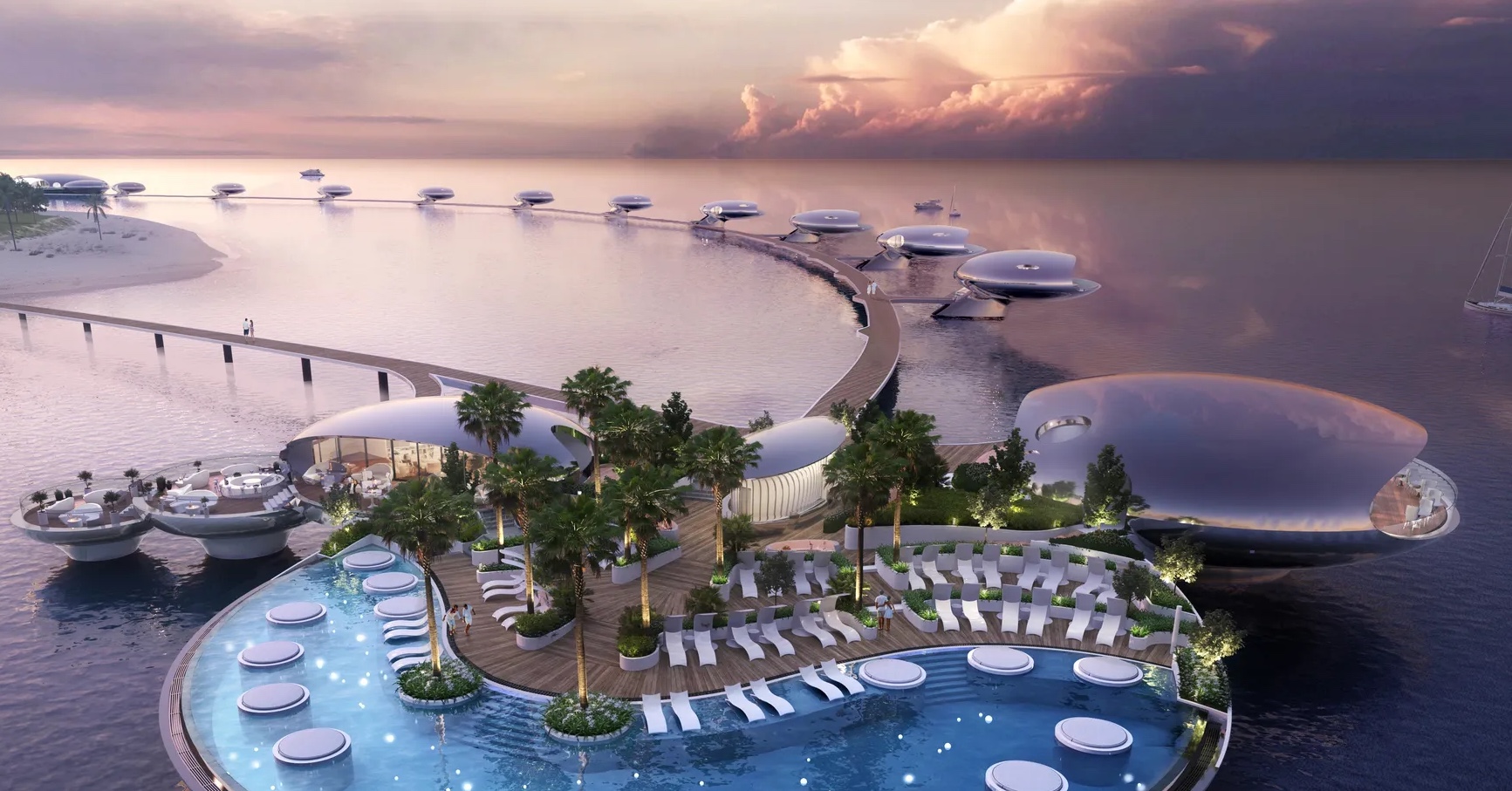

On the Saudi side of the Red Sea, a resort is redefining the concept of hospitality through architecture, energy self-sufficiency, and integration with the landscape.
A New Paradigm in Hospitality
Shebara is not a resort in the traditional sense of the word.
It’s a system.
A project that uses the language of luxury to demonstrate how architecture, technology, and sustainability can come together as part of a single vision.
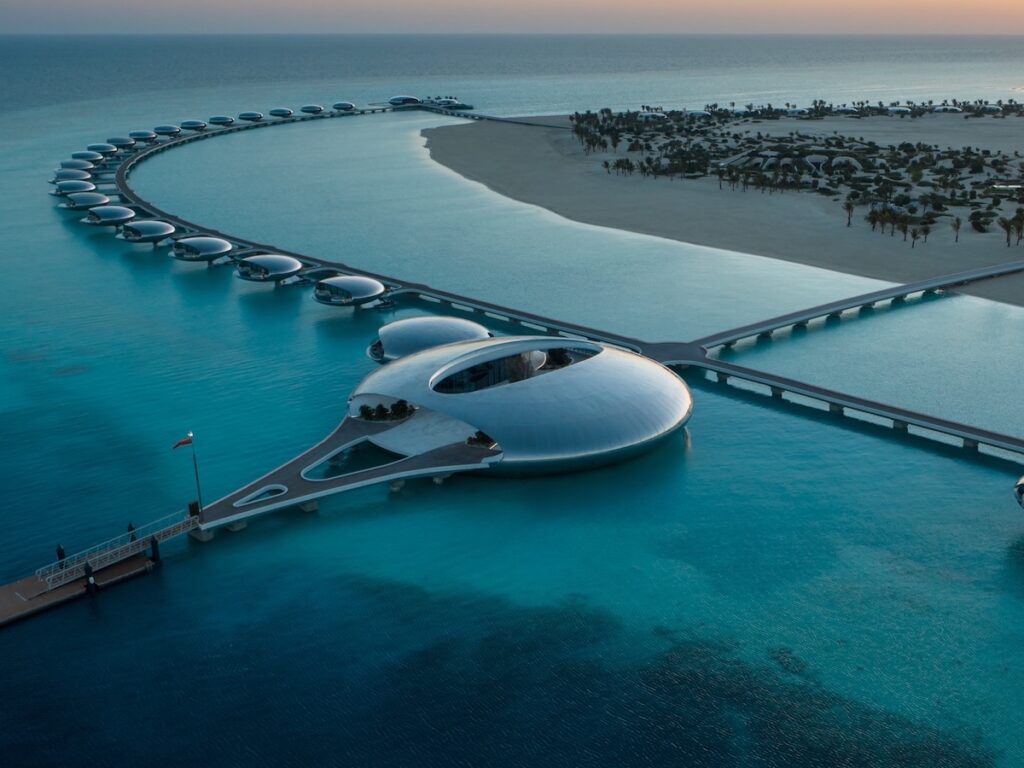
Located on Sheybarah Island, within a pristine lagoon in the Saudi Red Sea, the resort is one of the most iconic projects of Red Sea Global and one of the flagship projects of the Vision 2030 initiative.
Here, luxury does not mean abundance.
It goes hand in hand with the ability to strike a balance between the environment, technology, and the quality of the experience.
Architecture that chooses not to stand out
Designed by Killa Design , Shebara introduces an architectural language that breaks away from the traditional concept of the iconic building.
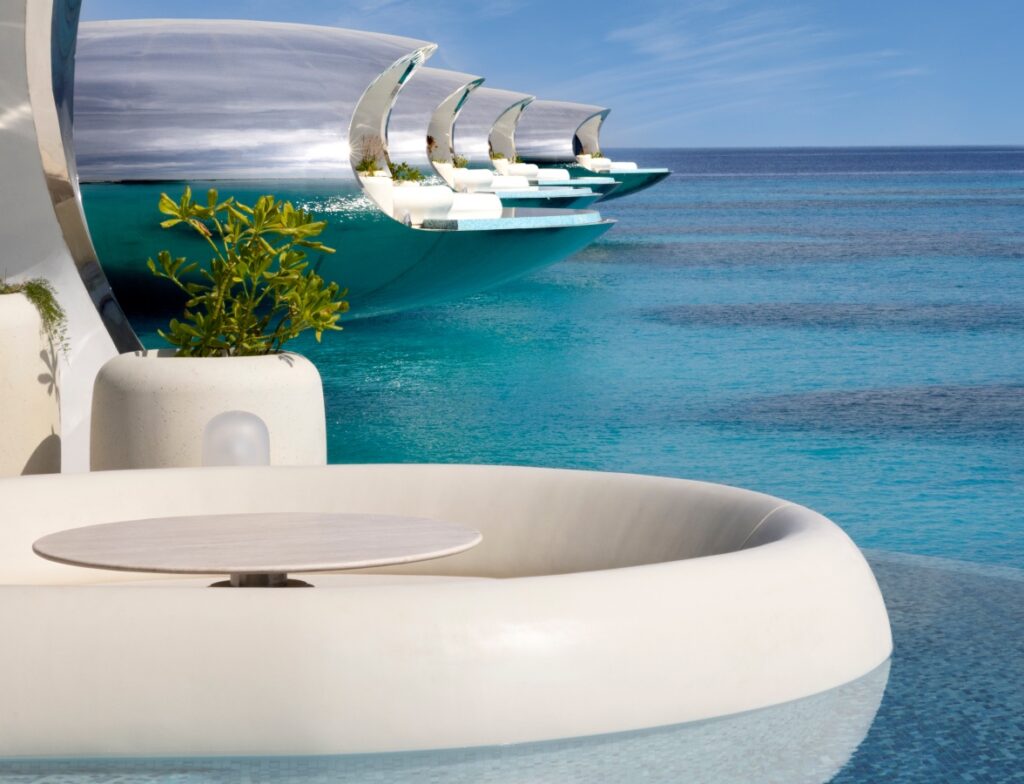
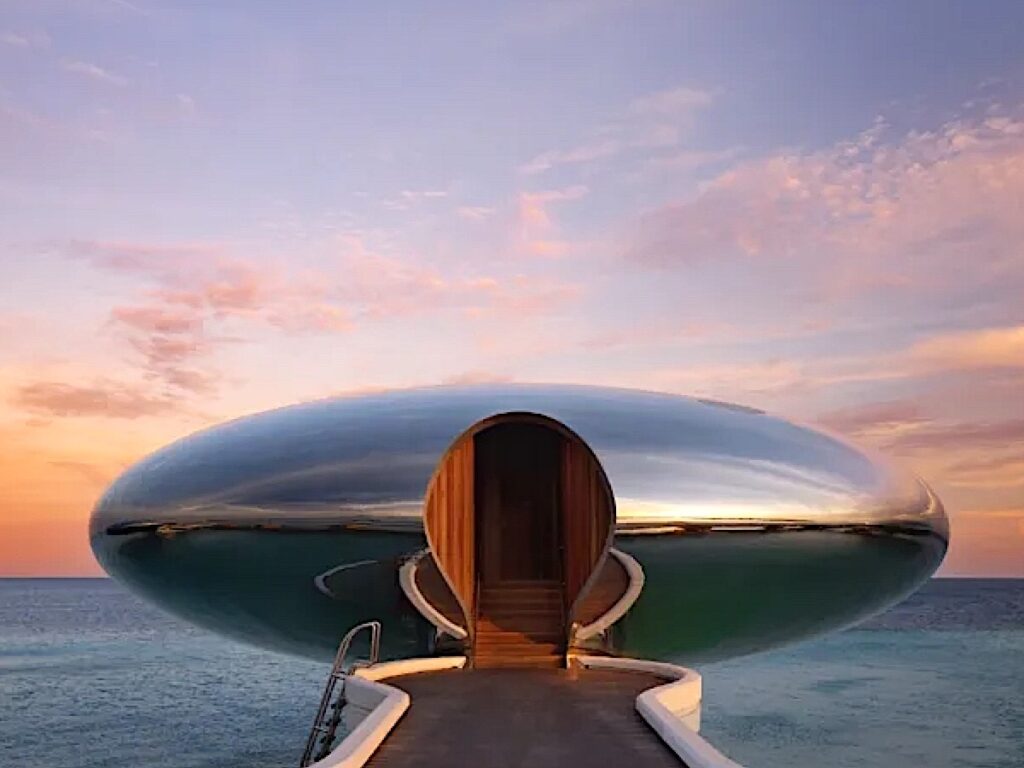
The villas, perched over the water or nestled on the beach, are inspired by the shape of sea pearls and seem to float in the lagoon as natural elements of the landscape.
The mirror-polished stainless steel finish was not chosen to impress.
He was chosen to disappear.
The surfaces constantly reflect the sky, the sea, and the light, altering the perception of the architecture throughout the day. Depending on the weather conditions, the buildings seem to blend into the landscape, allowing nature to take center stage.
Rather than simply occupying a space, architecture engages in a dialogue with it.
Self-Sufficiency as a Project
However, the most innovative aspect of Shebara is not its image.
That’s just how it works.
The resort is completely off-grid and powered by a large solar power system that generates all the energy needed for the entire complex. Desalination systems, circular resource management, and advanced energy-efficiency technologies enable the resort to operate while significantly reducing its environmental impact.
Here, sustainability is not presented as an added value.
It is an integral part of the project.
And that is precisely what makes Shebara one of the most interesting case studies in contemporary hospitality.
Interior Design: The Luxury of Simplicity
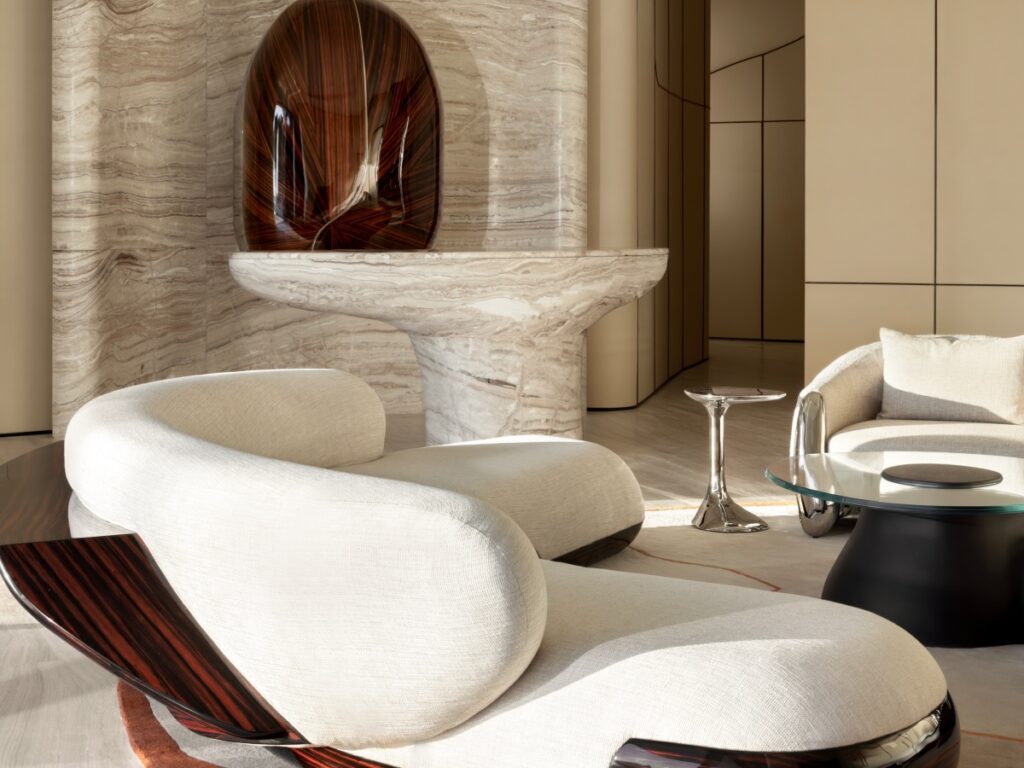
The interiors designed by Studio Paolo Ferrari continue this same dialogue between innovation and nature.
Continuous surfaces, soft shapes, authentic materials, and artisanal craftsmanship come together to create spaces that eschew any technological ostentation.
The project explores the perception of space.
The color palettes echo the surrounding landscape, while the curved shapes naturally guide the eye toward the sea.
The goal is not to create spectacular sets, but rather spaces that convey a sense of calm, lightness, and continuity with the natural surroundings.
It is a design language that perfectly embodies the new concept of ” Quiet Luxury,” where the quality of the design takes precedence over the pursuit of visual impact.

Cuisine as Part of the Experience
The culinary offerings also follow the same design philosophy.
IKI.ROE interprets the encounter between Japan and Peru through contemporary Nikkei cuisine, while ARIAMARE , led by chef Marco Garfagnini , offers a refined take on Italian tradition.
They aren’t just two restaurants.
These are two pieces of the same story, in which every experience helps shape the resort’s identity.
The future of hospitality starts here
Shebara is not just a new destination.
It represents a new way of thinking about luxury.
A model in which architecture, landscape, technology, and energy are not designed separately, but as parts of a single ecosystem.
It probably won’t be a model that can be replicated everywhere.
But it’s one of the clearest signs of how the international hospitality industry is evolving: less spectacle, more planning. Less ostentation, more responsibility.
MLE Hospitality Executive Memo
Location
, Sheybarah Island, Red Sea, Saudi Arabia
Architecture
Killa Design
Interior Focus
, Studio Paolo Ferrari
Concept
Reflective villas inspired by marine pearls that interact with the landscape rather than imposing themselves on it.
Sustainability
A completely off-grid resort powered by solar energy, with desalination systems and circular resource management.
Highlight
: Reflective steel becomes a design tool that blends architecture into the landscape.
MLE Take
Shebara demonstrates that the future of luxury no longer lies in excess, but in the ability to design complex systems in which architecture, nature, and technology coexist in balance.

